

FREE hit counter and Internet traffic statistics from freestats.com

Amused Muse

Inspiring dissent and debate and the love of dissonance

My Photo
Name:
Location: Surreality, Have Fun Will Travel, Past Midnight before a Workday

Master's Degree holder, telecommuting from the hot tub, proud Darwinian Dawkobot, and pirate librarian belly-dancer bohemian secret agent scribe on a mission to rescue bloggers from the wholesome clutches of the pious backstabbing girl fridays of the world.


Sunday, March 16, 2008

Did George Hodel Kill the Black Dahlia?
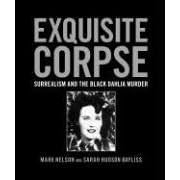
On Friday, before I got off work, I saw a strange book in the museum shop and knew that I had to have it:


Even if I didn't buy the premise - surrealism, and the Black Dahlia! I had to have it.


Heretofore I've been blasé about the George Hodel hypothesis - a surgeon with friends in the movies and with surrealist connections (notably his friend Man Ray) whose son has become convinced that his father murdered and bisected Elizabeth Short, aka the Black Dahlia. I have always leaned toward John Gilmore's assertion - that an itinerant, creepy loner named Jack Anderson Wilson killed the aspiring actress, as well as an heiress named Georgette Bauerdorf. Always leaned toward that assertion, that is, until now.


Certainly I do not think that surrealist art, which I admit is full of distorted and bisected "muses," is the cause of Elizabeth's death - surrealism is about the unconscious, what intrigues and frightens us, and certainly would have many parallels with a notorious crime that also intrigues and frightens us. However, the facts about Hodel are fascinating - and unsettling. Enough so to allow me to change my mind.


I have not read the book Black Dahlia Avenger by his son Steve Hodel, and I must say that the two photographs allegedly of Liz Short that Hodel found in his father's possession, do not resemble her at all. But there are many other details - too many to recount here - that have piqued my curiosity - and my alarm. I think there's something to this.


Certainly Hodel's book is more plausible that the trash written by Janice Knowlton, who only has "repressed memories" [remember that fad?] on her side, and who behaved rather disgracefully toward the person who has maintained what I consider to be the authoritative online resource on this crime.


So at this point I am in a holding pattern as to the merits of this new hypothesis. I must add that none of these books have supplied enough information for the LAPD to officially reopen the case.


Another resource I've found is this haunting film, a visual timeline of the crime and its aftermath, put together by a filmmaker named Larry Harnish. Masterful work, Larry! Larry also has his own hypothesis as to the murderer's identity. I think his is quite plausible, too.


Of course the last thing I could want would be a deep connection between surrealism and this murder, but in the final analysis this crime is surreal: from Elizabeth's father having faked his own death, to her tragic loss of Matt Gordon, to the incarceration of cleared murder suspect Red Manley in an insane asylum, to the false confessions and the mystery of her whereabouts in those final days.


Some feminists have accused surrealism of being anti-woman, of bisecting and fragmenting the female form out of hatred, but I am with with Dorothea Tanning (wife of Max Ernst) when she asserts:


Intellectually, they [the surrealists] flew close to the flame. Instinctively they were far from knowing the perverse appetites they so admire and glorified. As for emulating the fantasies of Sade's personae, they didn't even try...


As for these fragmented images of women, she add:


They were disguised hymns to her mystery. I don't believe that even in the most romantic moments of literary history have writing men so adored the idea of woman.

Nor do I. It follows therefore that the death of Elizabeth Short is surreal because life is surreal. Whether surrealism contributed to her death or not, via the misguided "artistic" expression of a violent wannabee, remains to be seen. But it does not surprise me that she could have become a sort of surrealist heroine to the artists in George Hodel's circle, including Man Ray and Marcel Duchamp, and if this is the case, then it illustrates Tanning's comments above.

It is a sad fact that bourgeois society, while pretending to be so righteous, tends to glorify the criminal (Charles Manson, the Zodiac Killer, PTK, etc.) rather than the victim of a famous crime, whose name is all too often unknown to the public - but Elizabeth Short is an exception.

This crime is named after her - not her murderer. It is she who walks in the minds of those like me who are fascinated with her story. It is her charm and her beauty that stares out of photographs and into the hearts of people like me who want to solve this crime. Whoever her murderer is, he could never be as interesting as she was.

Labels: , , , , , , , , ,

Thursday, December 20, 2007

Christians Against Christmas

Christmas is such a well established tradition/shopping season in the United States that it's difficult for many people to imagine that it was once a controversial holiday, rejected by many Christian denominations, even today.

"People don't think of it this way, but it's really a secular holiday," said Foster, a Princeton-based pastor in the United Church of God. He last celebrated Christmas when he was 8.

His church's objection to Christmas is rare among U.S. Christians. Gallup polls from 1994 to 2005 consistently show that more than 90 percent of adults say they celebrate Christmas, including 84 percent of non-Christians. That's a huge change from an earlier era, when many Protestants ignored or actively opposed the holiday. But as it gradually became popular as a family celebration, churches followed their members in making peace with Christmas.

But think about it. Remember these lines from A Christmas Carol:

"There are many things from which I might have derived good, by which I have not profited, I dare say," returned the nephew. "Christmas among the rest. But I am sure I have always thought of Christmas time, when it has come round -- apart from the veneration due to its sacred name and origin, if anything belonging to it can be apart from that -- as a good time: a kind, forgiving, charitable, pleasant time: the only time I know of, in the long calendar of the year, when men and women seem by one consent to open their shut-up hearts freely, and to think of people below them as if they really were fellow-passengers to the grave, and not another race of creatures bound on other journeys. And therefore, uncle, though it has never put a scrap of gold or silver in my pocket, I believe that it has done me good, and will do me good; and I say, God bless it!"

"God bless Christmas"? Didn't that strike you as odd? It always did me. Did Christmas sneeze? Well, Christmas was not a universal holiday in England back then, either, and seen in this light, those words make more sense.

Christmas wasn't embraced by Americans until the 19th century - and even then, it was not embraced by all. But the idealistic writings of Washington Irving popularized the image of Christmas as a family-centered, egalitarian holiday dedicated to charity and peace.

In 1819, best-selling author Washington Irving wrote The Sketchbook of Geoffrey Crayon, gent., a series of stories about the celebration of Christmas in an English manor house. The sketches feature a squire who invited the peasants into his home for the holiday. In contrast to the problems faced in American society, the two groups mingled effortlessly. In Irving's mind, Christmas should be a peaceful, warm-hearted holiday bringing groups together across lines of wealth or social status. Irving's fictitious celebrants enjoyed "ancient customs," including the crowning of a Lord of Misrule. Irving's book, however, was not based on any holiday celebration he had attended – in fact, many historians say that Irving's account actually "invented" tradition by implying that it described the true customs of the season.

The United Church of God and Jehovah's Witnesses and other conservative Protestants do not celebrate Christmas. Wiccans and Pagans celebrate Yule, while many atheist/agnostics and non-practicing Jews prefer to celebrate the Winter Solstice, although some (like Richard Dawkins) celebrate Christmas - which gets some Bible-believing folks into a lather - a humorous lather, or in the case of Albert Mohler, a weird, Scrooge-like, fribbitiginny-conniption-fit.

On the other hand, the Klingons love Christmas! Who’d’uv thunk?

(I hope that I don't have to remind anyone that Hanukkah is not "how the Jewish people celebrate Christmas," as one woman griped in an interview on NPR in the 1980s, after she had just given a talk on Hanukkah to a bunch of Christians. I never forgot that one! A perfect example of projection.)


Presenting both sides:
and mine:


Labels: , , , , , ,

Tuesday, November 20, 2007

Reviews and Research by Yours Truly

I had no idea these were still online, in violation of Tasini v. United States (that's okay!). Damn lawyers!

You need to sign in to look at them. Most of my stuff is not online. (Damn lawyers!)

My review of While I Was Gone by Sue Miller.
Review of Cassanova In Love by Andrew Miller (no relation).

The best book I ever reviewed was the exquisite The Underpainter by Ann Urquhart. Reviewing The Evolution of Jane by Cathleen Schine was perhaps what piqued my interest in the Galapagos, aside from The Voyage of the Beagle by Darwin himself.

Prospect Park, An Historical Survey, done for Hess, Roise and Company back when I was in historic preservation. I also assisted on a a survey of historic properties in the Lake Minnetonka area, and gathered archaeological data on the excavation of the Mill Ruins (neither of them posted online), years before I was to volunteer there.

Everyone should Google him or herself every once in a while.

Labels: , ,

Thursday, August 09, 2007

In Memoriam: Raul Hilberg

Raul Hilberg, author of The Destruction of the European Jews, has died.

He was a controversial figure, but a heroic and provocative one to me. I have yet to finish reading this book - it's a painful thesis and an emotionally draining book, in the manner that The Rise and Fall of the Third Reich, or The Gulag Archipelago, by Solzhenitsyn, are. I never finished those two, either, although I intend to - reading those books taught me that there is a step beyond desensitization, that being, traumatization. For my own emotional well being I had to put the books down for a while.

(I have not yet attempted to read the book Psychiatric Terror, by Sidney Bloch and Peter Reddaway, but someday I'll have the guts. This book has the distinction of catching the eye of people on the bus when I carried it home, people who begged me for the title and author, and wrote them down. Anyone who knows me knows that I was never an apologist for the Soviet Union.)

If you are interested in Holocaust studies, then I highly recomment Lawrence Langer's Admitting the Holocaust. This book is not about Holocaust denial in the classic sense, but pricks the conscience of the average person who knows that the Holocaust happened but seeks out comforting stories, tales of individual heroism, accounts of people dying with dignity, etc., instead of confronting the fact that millions of frightened people were tortured to death and they should not serve as the backdrop for heartwarming dramas about the few who survived.

Labels: , ,